 Footy & Co.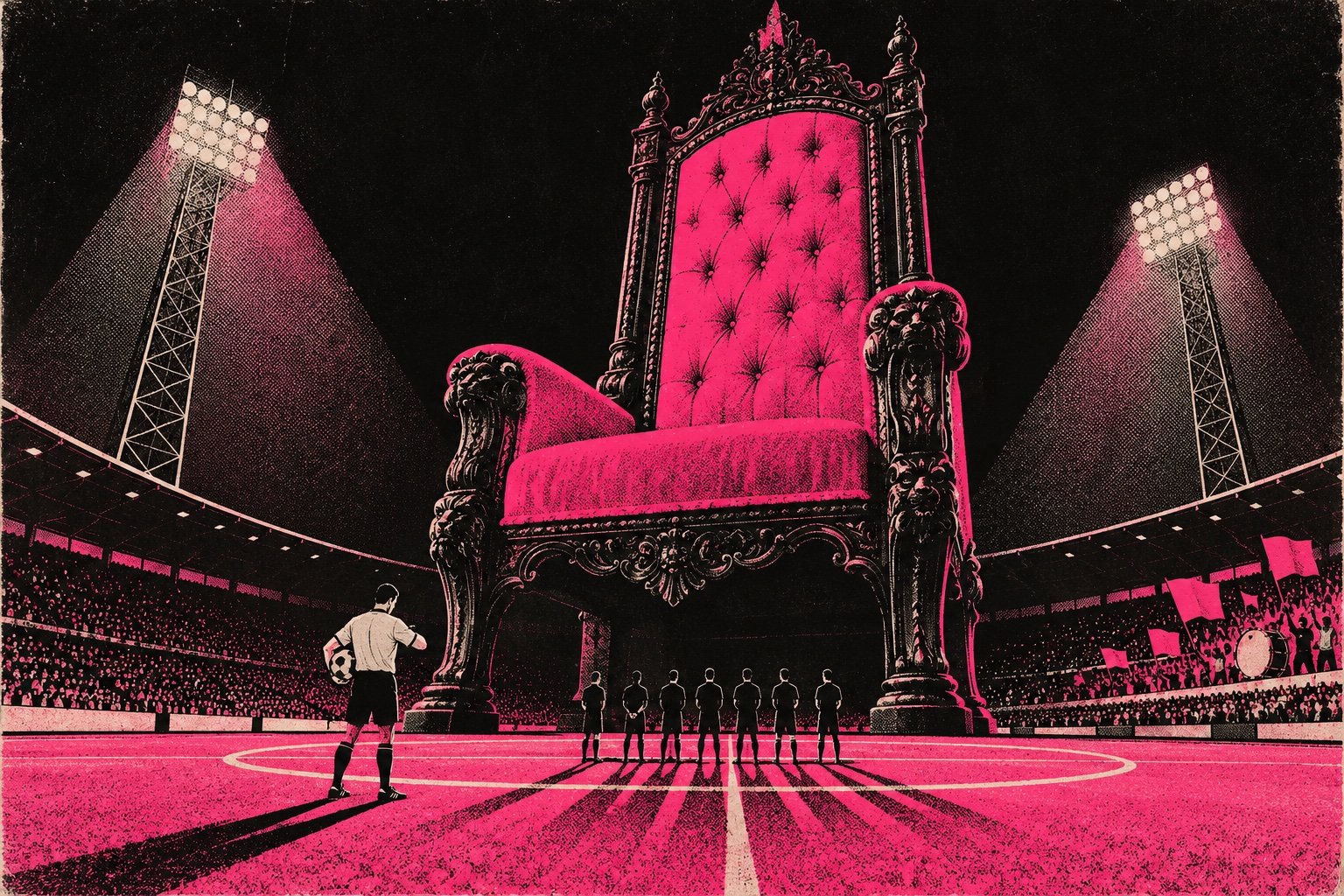
I spent most of my life loving soccer from somewhere else.
That is what you did in South Florida. You watched clubs elsewhere in the world have the thing you wanted: histories and songs and stadiums that belonged to generations of families.
You borrowed one of them, usually from thousands of miles away, and cared about it sincerely.
But there was always some distance in the relationship. Their streets were not your streets. Their memories were not your memories.
Miami had the Fusion once, but I was young enough when they disappeared that they never really had the chance to become mine.
Then came the waiting.
So in 2019, when Inter Miami began taking deposits for season tickets, I put one down before there was a roster to study or a team to judge.
At the time, buying those tickets was probably not the most sensible thing I could have done with my money. I was not making much, and season tickets belonged comfortably in the category of things I could technically afford but probably should not have been buying.
I bought them anyway.
Not because I knew Inter Miami would be good. There was no team yet to be good.
Not because I imagined Lionel Messi would one day be playing in front of my seat. That would have sounded absurd.
I bought them because, finally, there was going to be one here.
Ours.
My story is not unusual. There were people all over South Florida who had waited longer than I had, wanted it just as badly and made their own irrational decisions to be part of something that, at the time, existed mostly as a promise.
So when I say I have been a season-ticket holder from the beginning, I do not mean it as a badge.
I mean that before Inter Miami became something the world wanted to watch, it was something some of us had simply been waiting for.
Which is what makes this difficult to say.
I love Inter Miami.
I do not particularly like this team.
There is plenty about Inter Miami that deserves celebrating.
From the beginning, the club told us what it wanted to be: big.
Jorge Mas and David Beckham wanted the best players, global relevance and a club willing to operate with an ambition that often seemed out of place in a league built carefully and incrementally.
Eventually, they brought Lionel Messi here.
I admire that ambition. I think American soccer is better because of it.
Inter Miami has forced MLS clubs and their supporters to reconsider what an American team should be willing to attempt. It has made rival fan bases ask harder questions of their own ownership. It has shown that some of the limitations American soccer accepted for years were not really limitations at all.
There are supporters around MLS who resent Miami for that.
I don’t.
I want Inter Miami to keep pushing.
What has become harder to admire is the way a club built on refusing to accept limits increasingly carries itself as though no limits should apply to it.
And that is where this version of Inter Miami has lost me.
A team does not become unlikable all at once.
It happens through accumulation: enough gestures, habits and little acts of self-importance that eventually they stop looking incidental and begin to look like character.
Inter Miami has accumulated plenty.
There is the familiar scene after halftime: the opponent has returned to the field, the officials are ready, the stadium is waiting, and Miami is still somewhere inside.
It has happened throughout the Messi era, eventually often enough for MLS to fine the club and suspend its coach for repeated late-kickoff violations.
Two or three minutes are not a crisis.
But lateness contains its own small message.
You can wait.
There is a similar presumption in the way Miami deals with referees.
A whistle goes against the team and suddenly the decision seems less like a ruling than the opening offer in a negotiation. One player arrives, then another. An ordinary foul becomes a conference.
Rodrigo De Paul has become the clearest embodiment of it.
His résumé with Argentina speaks for itself.
His Inter Miami résumé does not—not yet.
There have been good moments, but his impact has not consistently matched either his reputation or the size of his reaction every time something goes against him.
The attitude has arrived more reliably than the performances.
There is always another complaint, another gesture, another look of disbelief.
And the optics away from the field have not always helped.
De Paul has made repeated trips abroad during the club season, including to attend concerts by his girlfriend. Players are entitled to lives beyond soccer, obviously. But long-haul travel between matches is hardly ideal for recovery, and for a player whose contribution here is still being judged, it invites fair questions about commitment.
None of this is disqualifying on its own.
That is the point.
Nor was the night Inter Miami’s own supporters spent 85 minutes silent because they felt the players had stopped acknowledging them after home matches.
The dispute has since been resolved, and the players now acknowledge the section.
Good.
But for one night, people who arrive early, carry flags, beat drums and turn their devotion into part of the spectacle decided the only way to be noticed was to remove themselves from it.
Neither, by itself, is the club’s strange relationship with the media.
Win, lose or draw, many of Miami’s biggest players rarely have to answer questions afterward. Too often, younger players are left standing in front of microphones speaking for a team whose most powerful voices remain unavailable.
No one needs Lionel Messi at a microphone after every match.
But the pattern is the same.
The opponent can wait. The referee can listen. The supporters can understand. The younger players can answer.
After a while, you begin to notice what all of those things have in common.
And then there was the infamous 2025 Leagues Cup final against Seattle.
Inter Miami lost 3–0.
After the whistle, Luis Suárez put Obed Vargas in a headlock during the confrontation that followed and later spat on Gene Ramirez, Seattle’s longtime head of team security and player relocation.
Ramirez was 77 years old.
Spitting on anyone is indefensible.
Doing it as one of the most experienced players of your generation, toward an elderly member of another club’s staff, after losing a final by three goals made the image particularly ugly.
Of course, Suárez did not arrive at that moment without history.
He had already been suspended for biting three opponents and served an eight-match ban in England after an FA commission found he used a racial reference toward Patrice Evra, a finding Suárez disputed.
Whatever the context in Seattle, the image is difficult to defend.
History matters when the same sort of moment keeps resurfacing.
And I still cheered the next time he scored.
Their player complains and he is unbearable. Ours complains and he cares.
What we condemn in an opponent, we often translate into virtue when it wears our colors.
I am not above that.
But loving a team cannot require pretending not to see it.
This is where I want to be careful, because I do not want a humbler Inter Miami if humility means a smaller one.
I do not miss losing. I do not romanticize the years when nobody outside South Florida particularly cared what happened here.
I want Messi. I want the ambition. I want Jorge Mas and David Beckham making calls other owners think are ridiculous. I want Inter Miami pursuing players MLS clubs supposedly cannot sign. I want rival ownership groups looking south and feeling pressure to spend more, dream bigger and demand more of themselves.
That part of Inter Miami has been good for MLS.
The league needs clubs willing to test its ceiling.
What it does not need is its most visible club behaving as though the league itself is merely scenery.
There is a profound difference between refusing to accept what MLS has traditionally been and refusing to respect the people who make it what it is.
The opponent deserves respect. So do the referee, the supporters, the young player left answering questions and the league itself.
Inter Miami has enough greatness that none of the other stuff should be necessary.
The greatest player ever is here. The trophies are here. The money, attention and expectation are here.
What exactly is gained by making another team wait?
What status is earned by surrounding another referee?
What kind of champion loses 3–0 and spits on someone afterward?
None of it makes Miami bigger.
It makes something extraordinary look small.
So, MLS, sorry.
Not for Messi.
Not for the money.
Not for the attention.
Not for a club that had the nerve to want more than American soccer had traditionally told its teams to want.
I am not apologizing for any of that.
You should want more of it.
I can defend the ambition.
I cannot defend the disrespect.
Some of the resentment surrounding Inter Miami is envy.
Some of it, this team has earned.
The club has done extraordinary things for this league.
This team should treat the league like it matters.
I will still be there. If Messi creates magic, I will stand. If De Paul or Suárez scores, I will still celebrate.
Update: the day came.
— Inter Miami CF (Burner) (@miamifutbolmls) December 6, 2025
That is fandom: unreasonable, permanent and full of contradictions we would never tolerate in almost any other relationship.
Maybe that is why this bothers me.
Inter Miami spent its short life insisting that an MLS club could be bigger than anyone imagined.
It was right.
Now it should remember that being bigger does not mean being above everyone else.
Sorry, MLS.
You deserve better from us.