 Footy & Co.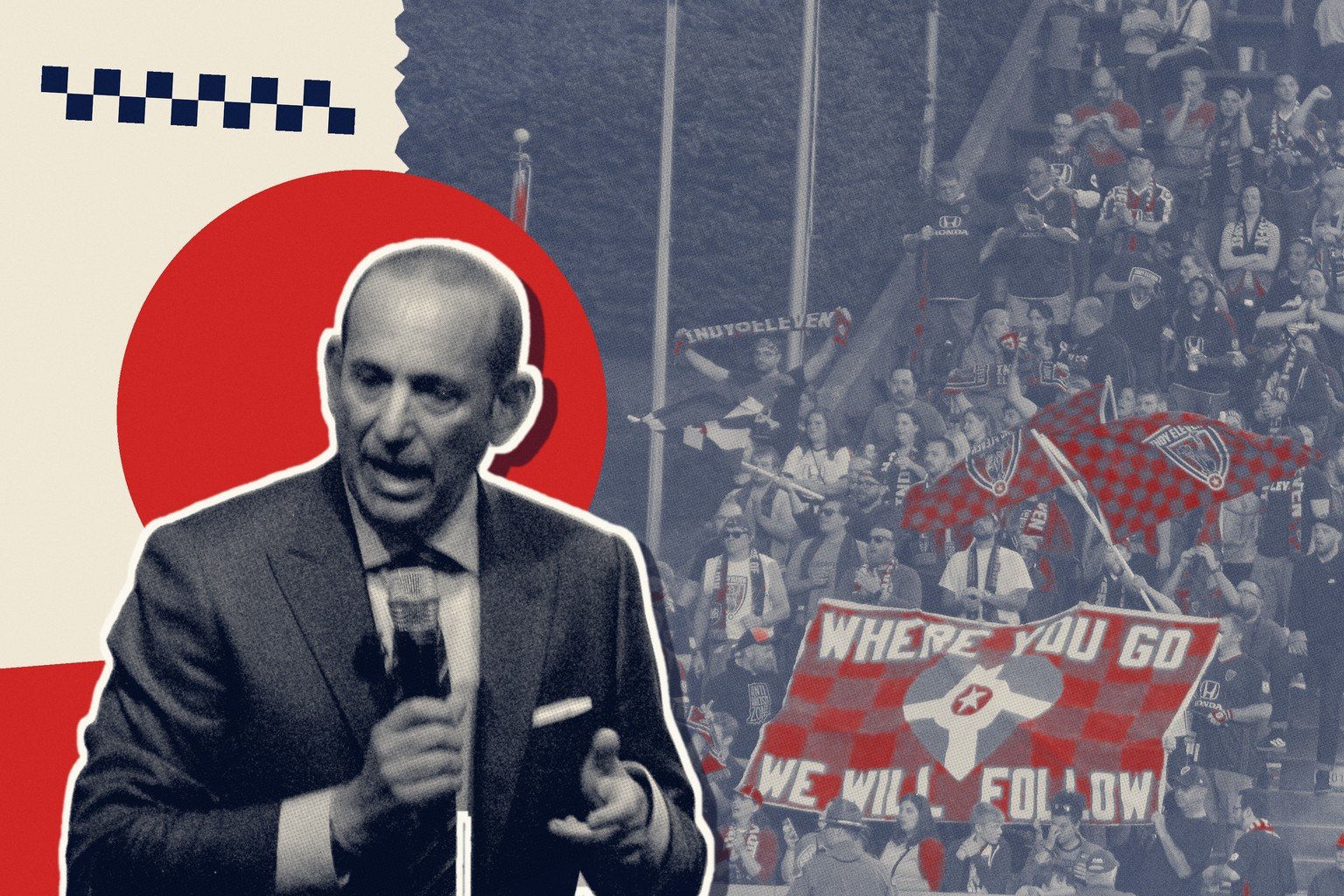
On Friday, Major League Soccer commissioner Don Garber praised Indianapolis for its “growing passion for soccer.”
It was the kind of phrase leagues use when they are imagining a market.
In Indianapolis, it landed a little differently.
The market does not have to be imagined.
It already has a soccer club.
Indy Eleven has been playing professional soccer in the city since 2014. Its supporters have been organizing even longer than that. The Brickyard Battalion was founded in August 2011, nearly two years before Indy Eleven itself was announced, by people trying to prove that professional soccer could work in Indianapolis. They made scarves for a team that did not exist yet. They showed up anyway.
When the club finally arrived, the city responded.
Indy Eleven sold all 7,000 of its available season tickets before playing a match and started a waiting list. Its first game at Carroll Stadium drew 11,048 people. Every home match of that inaugural 2014 season sold out. Across its first four seasons, the club averaged more than 9,000 fans per game.
That is not potential.
That is history.
And it is why the renewed conversation about MLS coming to Indianapolis feels so complicated for the people who have spent the last 15 years creating the very soccer culture the league now finds attractive.
David Ziemba, then the president of the Brickyard Battalion, described what that looks like from the inside in an interview with WFYI in May 2024, two weeks after the city changed course. “We’ve built this culture and community around the club and the crest and the colors,” he said. He called it a family.
What a club comes to mean to the people around it can be difficult to quantify.
It is also the part that matters most.
The story of Indy Eleven is not one of a minor-league team occupying a market until something bigger comes along. The organization has spent more than a decade building outward from the first team.
Its youth network now supports more than 18,000 young players through 24 affiliated clubs across Indiana. Its academy teams compete in MLS NEXT, ECNL and the USL Academy system. Its under-19 team won national USL Academy honors. The organization launched a women’s team in 2022, then watched it win the USL W League championship a year later in front of 5,419 people at Carroll Stadium — at the time, the largest crowd ever for a women’s soccer match in Indiana.
There are children in Indiana now wearing an Indy Eleven crest who were not alive when the Brickyard Battalion started trying to bring professional soccer to the city.
That should count for something.
Instead, Indy Eleven finds itself in the strange position of having helped prove Indianapolis could support professional soccer only to face the possibility that its success could make it expendable.
The tension became public in 2024.
By then, Indy Eleven had spent years pursuing a permanent home. State legislation enabling a soccer stadium had passed in 2019. Land was acquired. A 20,000-seat stadium became the centerpiece of the proposed Eleven Park development. In May 2023, city and state leaders joined the club for a ceremonial groundbreaking.
Less than a year later, Indianapolis changed course.
Mayor Joe Hogsett announced that the city would pursue an MLS franchise with a different ownership group and a different stadium plan. The city said it had concerns about the financing of Eleven Park and potential taxpayer exposure. Indy Eleven and developer Keystone Group disputed the city’s characterization and said they had been blindsided by the pivot.
Eleven Park stalled.
Indy Eleven stayed at Carroll Stadium.
And the MLS conversation continued without the professional soccer club that was already there.
Now it is alive again.
Hogsett recently met Garber and MLS leadership in New York, pitching a new site near Lucas Oil Stadium for a soccer-specific venue. Garber said the league was encouraged by the discussion and would continue conversations as the city’s plans develop.
For an Indy Eleven supporter, there is an uncomfortable irony in all of this.
MLS is interested in Indianapolis partly because Indianapolis has demonstrated that it cares about soccer.
Indy Eleven helped demonstrate it.
So why can’t Indy Eleven be part of what comes next?
It is a reasonable question because MLS has answered it both ways before.
Minnesota United existed before MLS and carried its name, identity and supporters with it when it entered the league in 2017. FC Cincinnati played three seasons in the USL before moving into MLS in 2019, retaining the club supporters had already made their own.
There are darker precedents, too.
Saint Louis FC played six seasons in the USL Championship before shutting down in 2020 with an unrelated MLS franchise on the way. The club cited both the financial damage of the pandemic and the impending arrival of MLS.
Three years later, San Diego Loyal announced it would cease operations only months after MLS awarded San Diego a separate expansion club. The Loyal cited the inability to secure viable stadium, training and academy facilities. MLS did not order either club to disappear, and their circumstances were more complicated than that. But the result in both cities was the same: an existing club went away while a new MLS organization took its place.
Indianapolis does not have to repeat that story.
Nobody is suggesting Indy Eleven should simply be handed an MLS franchise. Major League Soccer is a business. Expansion requires enormous capital, suitable ownership and a stadium plan capable of meeting the league’s standards. Indy Eleven’s ownership situation may have to evolve. New investors may have to enter. A different stadium site may ultimately make more sense.
All of that can be negotiated.
History cannot.
You can build another stadium. You can find another ownership group. You can design another crest and announce another name and hold another launch party.
What you cannot manufacture on opening night is 15 years of people caring.
You cannot recreate the supporters who organized before there was a team to support. You cannot reproduce the first sellout at Carroll Stadium. You cannot hand a new organization the memories of the 2016 Spring Championship, or a women’s national title, or the thousands of kids who have come through the club’s youth system.
Those things take time.
Indy Eleven has already spent it.
And there may now be another path for the club regardless of MLS. The USL plans to launch a sanctioned Division One men’s league in 2028 with promotion and relegation connecting its professional tiers. Indy Eleven has openly said it wants to compete at that level and that, aside from its stadium situation, the organization believes it meets the relevant Division One standards.
That makes the next few years unusually consequential.
MLS could arrive in Indianapolis and compete with the institution that helped make the city attractive to MLS in the first place.
Or everyone involved could try something harder.
They could find a way to bring Indy Eleven with them.
That feels like the point.
Indianapolis does not need Major League Soccer to give it a soccer history.
It already has one.
If MLS really wants Indianapolis, it should find a way to become part of that history — not replace it.